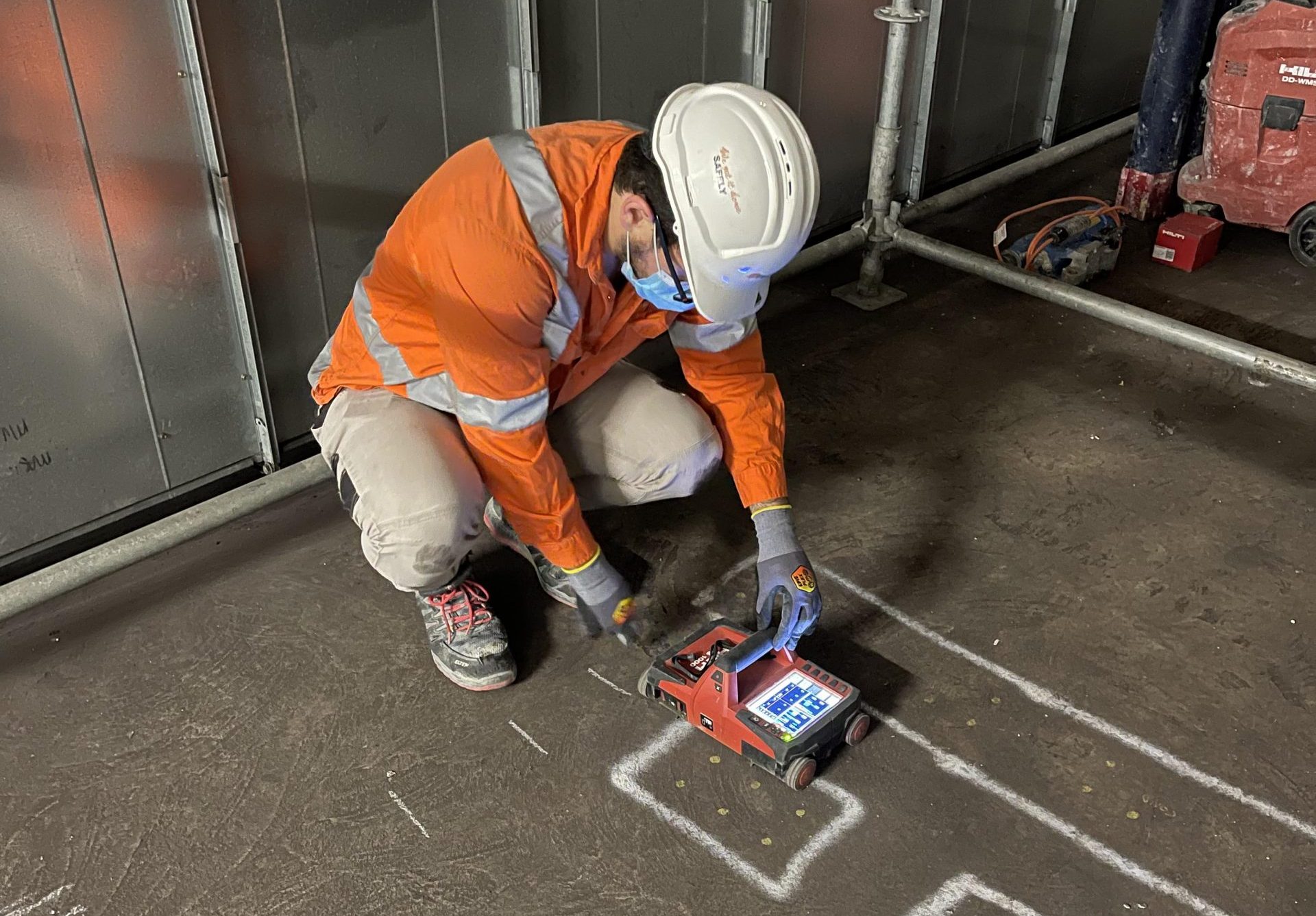
Scanning older concrete slabs can be tricky, even for experienced contractors and surveyors. Mistakes during slab scanning can lead to inaccurate readings, safety hazards, or unnecessary demolition work. By understanding the most common errors and implementing careful techniques, you can ensure accurate detection of reinforcements, conduits, and voids in older slabs.
Why Accurate Slab Scanning Matters
Older concrete slabs often contain hidden elements such as steel rebar, post-tension cables, electrical conduits, and plumbing lines. Misidentifying or missing these can cause:
- Structural damage during renovations or drilling
- Safety risks for workers
- Project delays and additional costs
Proper scanning and Dial Before You Dig NSW protects both people and property, providing confidence in planning and construction decisions. Accurate scans also help in project planning, cost estimation, and avoiding surprises during demolition or coring.
Common Mistakes in Scanning Older Slabs
1. Skipping a Thorough Inspection
One of the most common errors is beginning a scan without assessing the slab visually. Cracks, stains, or surface anomalies can indicate the location of embedded materials. Ignoring these cues can lead to incomplete or misleading scan results.
Avoidance Tip: Always conduct a visual inspection before scanning. Note any cracks, discoloration, or previous repair patches that might affect readings. Take photos of the slab to cross-reference during analysis.
-
Using the Wrong Scanning Equipment
Different scanners serve different purposes. Ground-penetrating radar (GPR) is ideal for locating metal and voids, while electromagnetic detectors are better for finding rebar. Using an unsuitable device can produce false readings or miss critical elements.
Avoidance Tip: Match your scanner to the slab’s material and the targets you need to detect. Consult manufacturer guidelines and calibrate equipment before use. For mixed-material slabs, consider using a combination of scanning technologies.
-
Poor Calibration
Older slabs often vary in density due to age, repairs, or different concrete mixes. Failure to calibrate your scanner to these variations can result in inaccurate depth and density readings.
Avoidance Tip: Perform test scans on known sections of the slab to adjust sensitivity and depth settings. Recalibrate regularly, especially when moving to a new area or after changing environmental conditions.
-
Ignoring Slab Thickness Variations
Concrete slabs may have varying thickness due to wear, repair patches, or original construction differences. Assuming a uniform thickness can lead to misinterpretation of scan data, especially when detecting embedded objects.
Avoidance Tip: Measure slab thickness manually at multiple points or use scanners capable of compensating for thickness variations. Record these measurements and integrate them into your scanning analysis for better accuracy.
-
Overlooking Environmental Factors
Moisture, temperature, and surface debris can affect scanning results. Wet slabs or puddles can distort radar signals, while dust or paint layers may interfere with electromagnetic detection.
Avoidance Tip: Ensure slabs are dry and clean before scanning. Account for environmental factors in your readings and repeat scans under different conditions if results are unclear. Cover nearby reflective surfaces that may interfere with signals.
-
Relying on a Single Scan Direction
Scanning in only one direction may cause missed objects or misaligned data. Metal elements, post-tension cables, or conduits running diagonally might be overlooked if the scanner only moves along parallel lines.
Avoidance Tip: Perform multi-directional scans, including perpendicular and diagonal passes, to ensure full coverage of the slab. Overlapping scans help catch elements that may otherwise be missed.
-
Failing to Mark or Document Findings
After scanning, some operators neglect to mark detected objects or record accurate maps. This oversight can result in accidental drilling into cables or rebar during later construction phases.
Avoidance Tip: Clearly mark detected elements on the slab with chalk, tape, or temporary paint. Maintain digital or paper records of scans for reference during work. Include depth, spacing, and orientation information whenever possible.
-
Misinterpreting Scan Data
Reading GPR or electromagnetic scans requires experience. False positives, overlapping signals, or reflections can be misinterpreted, leading to unnecessary caution or risky decisions.
Avoidance Tip: Invest in training for staff or consult with experienced technicians. Use multiple scanning technologies to cross-verify results when uncertain. Compare results to construction drawings or previous scans if available.
Troubleshooting Complex Slabs
Older or heavily reinforced slabs can create confusing readings. Overlapping rebar, dense post-tension cables, or repair patches may distort radar signals.
Tips:
- Perform additional passes at different angles and frequencies.
- Use high-resolution settings on scanners when detecting small or closely spaced elements.
- Cross-check with construction plans or previous scans.
- Conduct exploratory cores if safe and permitted.
- Document anomalies and mark them clearly for future reference.
Best Practices for Scanning Older Slabs
Following best practices improves accuracy, efficiency, and safety:
- Plan Before Scanning: Review drawings, define grid patterns, and identify known obstacles.
- Use Appropriate Technology: Combine GPR with electromagnetic or ultrasonic scanners when necessary.
- Record and Label Everything: Mark rebar, conduits, and voids directly on the slab; keep annotated digital records.
- Conduct Multiple Passes: Scan perpendicular, diagonal, and parallel directions for complete coverage.
- Verify Findings: Confirm detected elements with small test drillings if safe.
For large-scale or high-risk projects, consider a second operator to review scans in real time, ensuring no details are overlooked.
Safety Considerations
Accurate slab scanning is essential for preventing accidents:
- Avoid cutting into post-tension cables, which can compromise structural integrity.
- Prevent hitting electrical conduits to reduce the risk of shock or costly repairs.
- Identify hidden plumbing to prevent flooding during drilling or coring.
- Always follow site safety protocols and personal protective equipment (PPE) guidelines when scanning.
Documented scans, thorough marking, and proper planning significantly reduce these risks, protecting both workers and property.
Training and Continuous Improvement
Operators should receive ongoing training to stay current with scanning technologies and techniques:
- Attend manufacturer workshops and certification programs.
- Review case studies of scanning errors and their resolutions.
- Encourage team members to share lessons learned from challenging projects.
- Periodically practice on known test slabs to refine skills and ensure accuracy.
Investing in staff skills improves accuracy, efficiency, and confidence during complex scans.
Final Thoughts
Scanning older slabs requires careful attention, proper equipment, and methodical techniques. Common mistakes skipping inspections, poor calibration, single-direction scans, or misinterpreting data can lead to inaccuracies, safety risks, and unnecessary costs. By following best practices, including multi-directional scanning, meticulous documentation, troubleshooting for complex slabs, and ongoing staff training, you can ensure reliable results.
Whether renovating, drilling, or coring, avoiding these errors protects both your team and your project. Accurate slab scanning is essential for safe, efficient, and successful construction or maintenance work. By combining preparation, the right technology, and skilled operators, even the trickiest older slabs can be scanned with confidence, reducing risk and saving time and money.